Clock Replacement Inserts
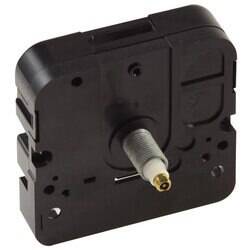
Picking Digital Clock Parts or Analog
Modern clock parts, such as hands, dials, and movements, are developed to operate electronically. Some clock parts, particularly those that concern presenting the moment, can be analog, implying the conventional min and hour hands superimposed over a printed dial, while others can be digital, employing 7-segment mathematical display screens, frequently LEDs. The contrast in between these 2 kinds is explored in this short article.
The purely digital clock parts do not show much selection. They can be found in a variety of dimensions, the framing is constructed in various colors, and even the LEDs themselves might reveal a variety of shades; nonetheless, there is hardly any variation in vogue. Analog parts, on the other hand, come in several designs in addition to colors and sizes.
For instance, when ordering analog dials, you can choose between Roman and Arabic numerals on the face of the dial (or even place-holder signs). There are a number of choices for the dial's history color and a few for the shade of the hands. And also, the number of hand design options is substantial.
Typical clock activities were exclusively analog, powered by a coiled spring or hanging weight. A pendulum and escapement combination regulated the timing of the second, and a network of gears positioned the hands radially in the correct proportion.
The electronic motion is powered by a stream of pulses originating from a resonating quartz crystal. All timing derivation is done in software application, and electronic signs up track elapsed time. But this motor likewise places the hands for proper time telling.
So, it is quite typical to incorporate a digital clock activity with analog parts, and a casual viewer could have problem identifying which sort of movement is running. Obviously, seeing a 7-segment display screen suggestions one off to an all-digital tool.
Accuracy of timing can differ with both modes of operation. The Swiss have actually shown that the old analog activities are capable of extremely accurate precision, though this comes with a price, and common makers often tend to produce motors that have merely ample timing. Quartz crystal resonating regularities are very high and exact, yet having to subdivide down to minutes and seconds, plus quantizing sound, often tends to restrict the precision of digital movements.
Choosing clock parts today begins with the kind of display you desire, either standard (analog) or 7-segment (digital). The latter needs a movement that is designed for it, and the staying options are basically limited to the devices you desire (alarm, radio, automated daylight cost savings shifts, or elegant sounds). You likewise may have an option in regards to 12- or 24-hour cycles, and screen of the month, day, and year.
If you want the conventional display of turning turn over a dial, you order the dial, hands, and motion individually (unless obtaining an insert or set), though you want to make certain everything collaborates stylistically. As mentioned above, your selections are much broader than the all-digital method. Below, you can additionally get motions that have longer cycles (e.g., regular or regular monthly), requiring specially calibrated dials and an additional hand.
Selecting analog screens presents further choices in terms of accessories or novelties. For instance, there are motions that present the changing of tide level for those living near the coastline. Chimes or cosmetic pendulums (not contributing to timekeeping procedure) are novelties that can include charm to your clocks. clock parts replacement
We suggest getting on a supplier's website and explore all their offerings, not just private elements but additionally packages and fit-ups that can simplify your clockmaking. There are great deals of means to increase your perspectives by seeing YouTube videos or chatting with professionals. We hope that we have started the viewers on the delightful and gratifying course to selecting digital clock parts or analog.